
CSFPN Events in 2026
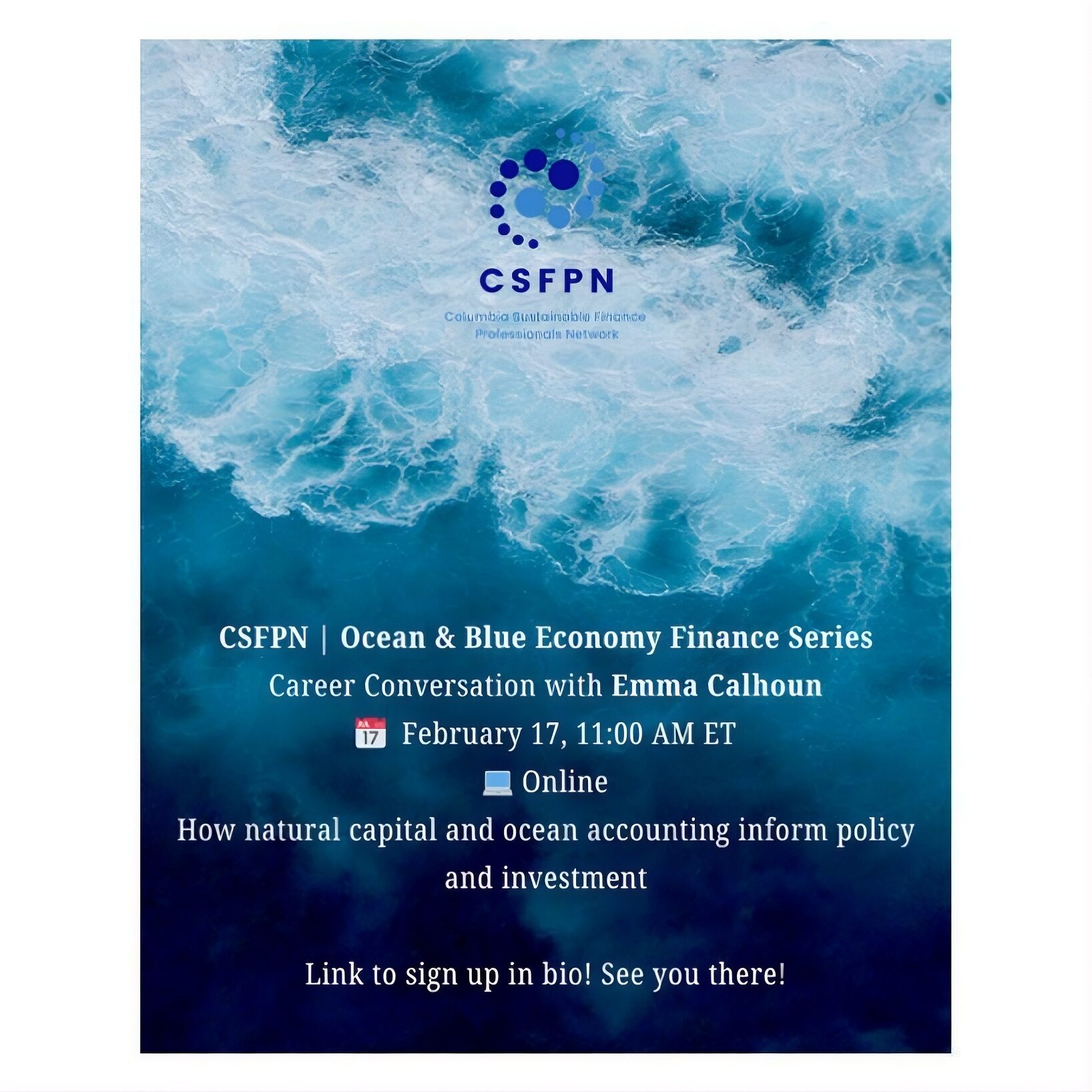
Ocean & Blue Economy Finance Event Series: Career Talk with Emma Calhoun
On February 17, the Sustainable Finance Professionals Network hosted a discussion with Emma Calhoun from the World Conservation Monitoring Centre, attended by around 20 people. Emma shared insights from her work on natural capital, explaining how it can be used to organize the stocks and flows of natural ecosystems and translate ecosystem changes into economic value through both quantitative and qualitative analysis. Her work involves systems thinking across hundreds of stakeholders, linking ecological changes to impacted communities, risks, and financial implications. She highlighted two current projects: one assessing climate impacts on UK fisheries and another estimating the economic value of a protected forest by combining ecological data with tourism and recreation value. Emma also shared career advice, noting key gaps in the field, including low private-sector adoption of TCFD and the lack of ocean-focused frameworks in existing nature-related reporting standards, and encouraged students to intentionally shape their LinkedIn feeds toward the work they aspire to do.
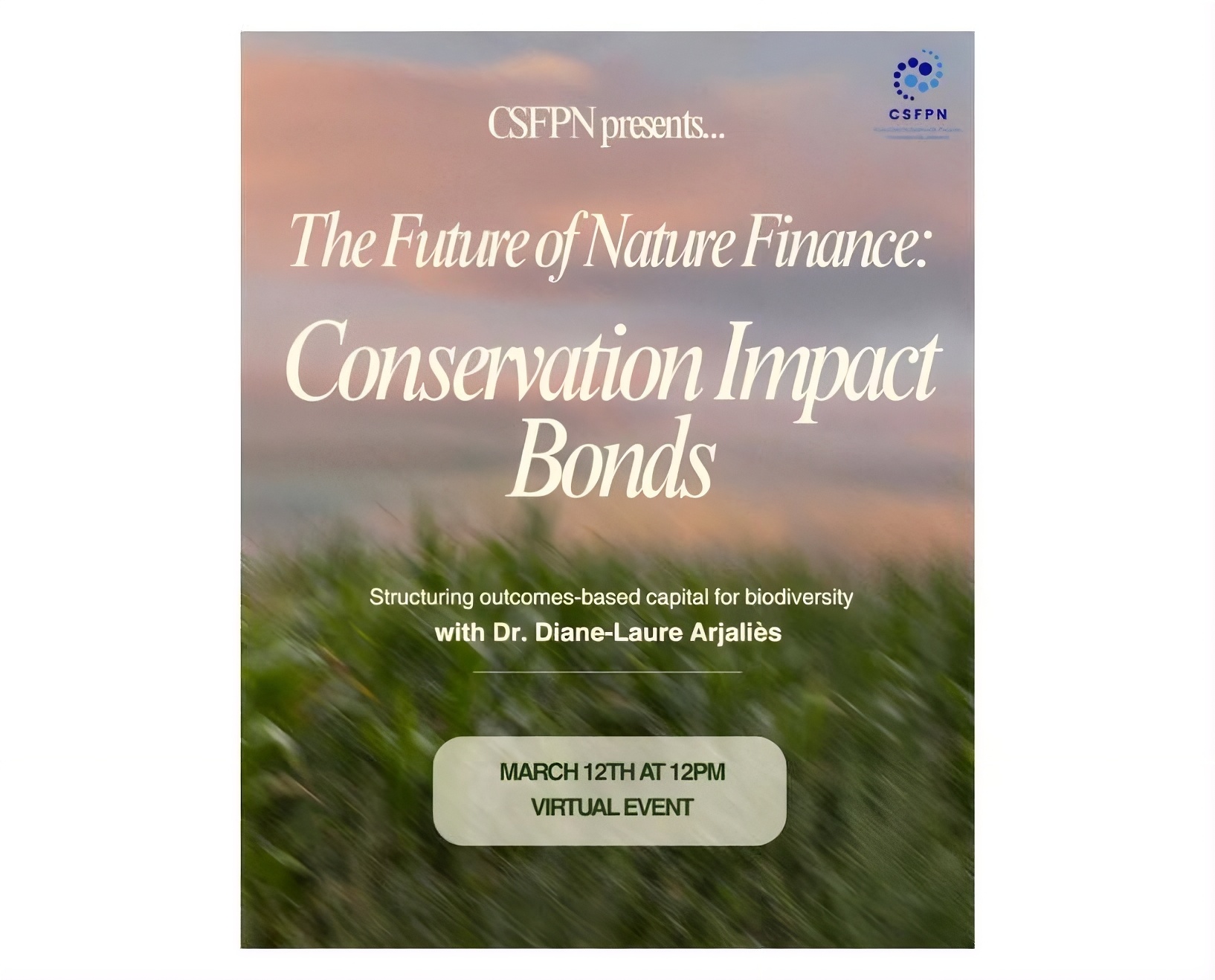
The Future of Nature Finance: Conservation Impact Bonds
Hosted by Columbia Sustainable Finance Professionals Network, The Future of Nature Finance: Conservation Impact Bonds brought together students to explore the evolving landscape of biodiversity finance. The session featured insights from Diane-Laure Arjaliès, who provided a comprehensive overview of how capital is being mobilized toward nature-based solutions (NbS).
The discussion began with a framing of NbS as a critical mechanism for addressing biodiversity loss while generating measurable environmental and social outcomes. Participants explored the current biodiversity finance ecosystem, including instruments such as green bonds, sustainability-linked bonds (SLBs), sustainability bonds, biodiversity credits, and debt-for-nature swaps. The conversation highlighted how these tools differ in structure, incentive alignment, and scalability, as well as their respective roles in channeling private capital into conservation. A key focus of the session was the barriers limiting the growth of biodiversity finance markets. These included challenges around standardization of metrics, difficulties in measuring and verifying biodiversity outcomes, and limited investor familiarity with nature-based assets. At the same time, significant opportunities were identified, particularly in structuring outcomes-based financing mechanisms that better align financial returns with ecological impact. Dr. Arjaliès also shared her firsthand experience working on one of the first Indigenous-led conservation impact bonds. She emphasized the importance of centering Indigenous communities in project design, governance, and benefit-sharing. Her insights underscored that successful nature finance solutions require not only financial innovation but also strong partnerships, trust-building, and respect for Indigenous knowledge systems.
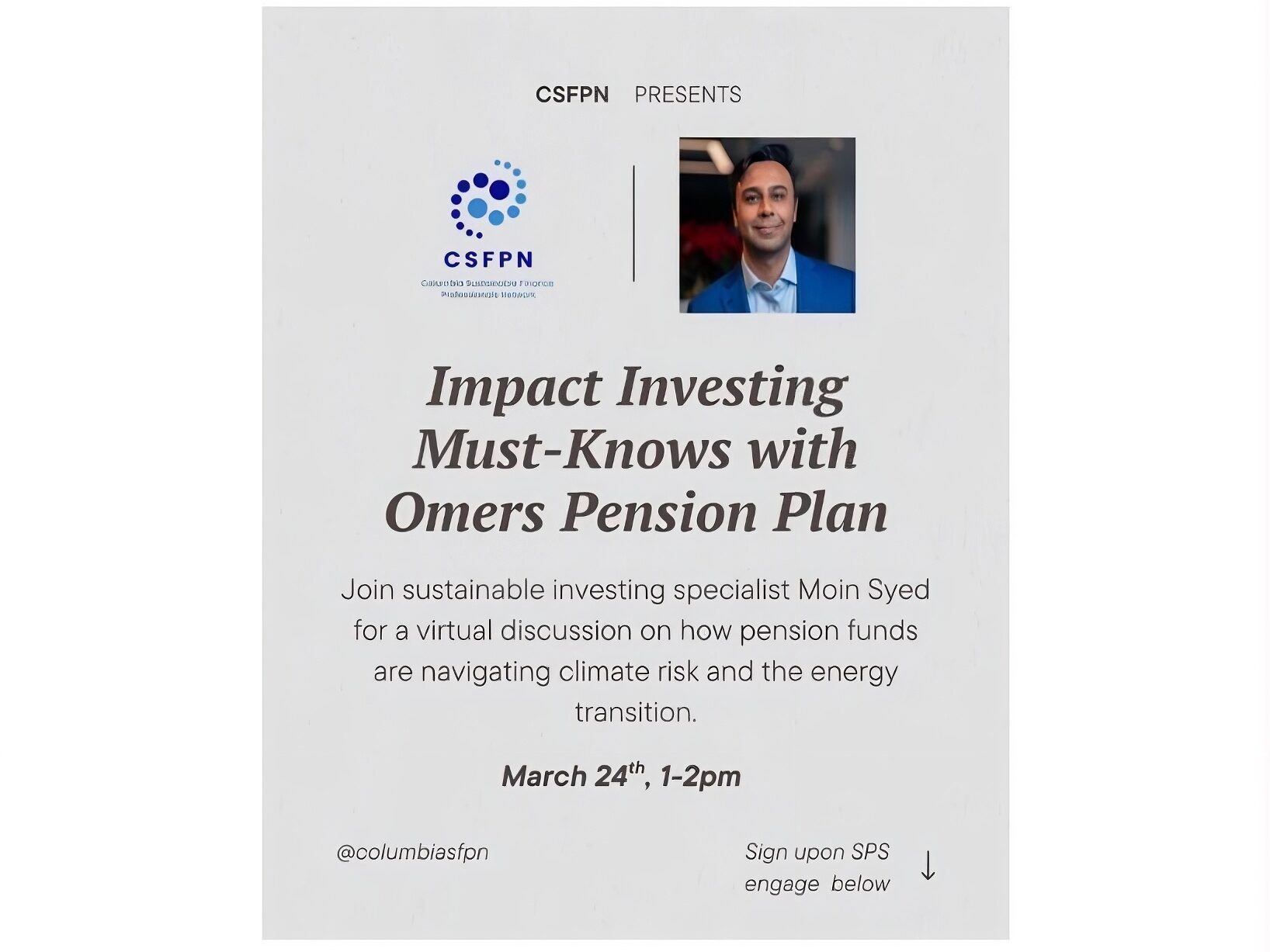
Impact Investing Must-Knows with Omers Pension Plan
The Sustainable Finance Professionals Network hosted a discussion with an impact investor from OMERS, focused on how large pension funds approach impact investing in practice. The conversation centered on how OMERS identifies attractive investments by aligning pension liabilities with opportunities that demonstrate sufficient sustainability maturity and risk-adjusted returns. A key emphasis was placed on integrating physical and transition climate risks into both due diligence and ongoing value creation, reflecting the growing importance of climate considerations in long-term asset management.
The discussion also explored OMERS’ Climate Action Plan, highlighting how decarbonization targets are operationalized across portfolio companies through active ownership strategies. Broader industry trends across the “Maple 8” Canadian pension funds were discussed, including increasing allocation to energy transition assets, deeper integration of ESG factors into core investment processes, and a shift from exclusion-based approaches toward value creation through sustainability. The session provided a practical view into how institutional capital is navigating the intersection of fiduciary duty and impact, emphasizing discipline in underwriting, scalability of impact, and alignment with long-term portfolio objectives.